Strategic advisory for the next stage of growth.
For founder-led and privately owned companies that have proven their market, but need stronger structure, leadership and execution to reach the next level.
Growth is rarely the problem. Holding it is.

There is a point in the life of most private companies where the things that produced the growth stop being enough to sustain it.
The company was built on the founder's judgement, relationships and appetite for risk. Those were the right instincts, and they worked. Revenue arrived, the team grew, the market responded. But somewhere between ten and a hundred people, the company quietly outgrows the way it is run.
The symptoms are rarely dramatic. Nothing breaks. Revenue often keeps climbing, which is precisely what makes the problem easy to postpone. What changes is the texture of the business: decisions take longer, priorities shift more often, the same conversations repeat in different meetings, and the founder finds that the company still cannot move without them.
Underneath, something more expensive is happening. Margin erodes in places nobody can point to. Commercial performance becomes a function of who is on the account rather than how the company sells. The leadership team is loyal and hard-working but was assembled for a smaller company. Execution depends on three or four people who cannot be replaced and cannot be promoted.
None of this is a failure of effort. It is a structural gap between the company that got here and the company required next — and effort is the one thing that cannot close it. Working harder inside an inadequate structure produces exhaustion, not scale.
Business Scale exists to close that gap: to give a company the commercial discipline, organisational structure, leadership depth and financial clarity that the next stage demands — and, in doing so, to make the business materially more valuable than it is today.
You may recognise your business here.
Most owners arrive with two or three of these. Rarely with none.
-
01
Revenue is growing but profitability is not.
Volume increases while margin stays flat or drifts downwards, and no one in the business can say precisely where it is being lost.
-
02
Commercial performance is inconsistent.
Strong quarters and weak quarters follow no pattern you can control. The pipeline is a hope rather than a forecast.
-
03
The company depends too much on the founder.
Key relationships, final decisions and institutional memory all sit with one person. Holidays are theoretical.
-
04
Leadership lacks alignment.
Each function is competent on its own terms, but they are optimising for different things and nobody has said so out loud.
-
05
Execution depends on too few people.
Everything important routes through the same three or four individuals. Their departure would be a crisis, not an inconvenience.
-
06
You are preparing for expansion, investment or succession.
Something is on the horizon that will subject the company to outside scrutiny, and it would not survive that scrutiny today.
Six layers. Worked in sequence.
Growth fails where one of these layers is missing. Each only holds if the one before it does — which is why the order matters as much as the content. Not every engagement touches all six; the diagnostic establishes which of them are actually constraining the business.
-
01
Strategy
Where the company competes and what it deliberately does not pursue. Strategic priorities that survive contact with the operating year, rather than a plan that is read once and filed.
The discipline here is subtraction: most private companies are pursuing more than they can resource, and the cost is spread thinly across everything. Most scale problems are strategy problems that were never stated clearly enough to be tested — a direction everyone assumes is shared until you ask three people to write it down.
-
02
Commercial Engine
A sales structure that does not depend on the founder. Positioning, pricing, prospecting discipline, pipeline hygiene and conversion rates that can be measured, forecast and improved deliberately.
This is usually where the fastest measurable gain sits, and where the founder is most reluctant to let go. The test is simple: if the founder stopped selling tomorrow, what would happen to the forecast?
-
03
Leadership
The management depth the next stage requires: which roles are critical, which are missing, who is ready to take more, and where the honest gaps are.
Including the conversations that have been postponed — the capable person in the wrong seat, the long-serving manager who has stopped growing, the role that has been vacant in practice for a year. Loyalty and capability are different things, and growth exposes the difference.
-
04
Organisation & Governance
Structure that matches the company's size rather than its history. Clear roles, assigned accountability, and decision rights that remove the founder from the middle of every question.
With it, the reporting and oversight appropriate to the company's stage — whether or not there is a formal board. What gets escalated, to whom, and on what evidence. Governance in a private company is not bureaucracy; it is the mechanism that lets an owner delegate without losing control.
-
05
Execution
An operating rhythm with a fixed cadence, a small number of numbers that matter, and follow-through that is visible.
The discipline that turns a busy company into a delivering one. Activity is easy to generate and easy to mistake for progress; cadence is what separates them, and it is what makes drift visible while it is still cheap to correct.
-
06
Value Creation
Where margin is created and where it leaks. Unit economics understood by the people who influence them, and cost discipline that does not compromise the growth it is meant to protect.
And beyond profit, the gap between what the company earns and what it is worth: equity story, information discipline, management depth and the operational proof points that survive due diligence. Two businesses with identical revenue can differ by a multiple of three in what they are worth. The difference is everything above this line.
Three ways to work together.
The sequence is deliberate. The diagnostic establishes what is true; the programme installs what is missing; the advisory holds it in place. Each stands on its own, and each is a separate decision. Scope and fees are defined after the initial conversation.
- 01Diagnostic
- 02Programme
- 03Advisory
-
01
Business Scale Diagnostic
A structured investigation into why the company performs the way it does. Interviews with the leadership team individually and in confidence, review of commercial and financial data, and an executive memorandum with findings, priorities and a ninety-day plan.
It stands on its own: many companies take the diagnostic, execute it internally with their own team, and return a year later for the next stage. For most owners it is the right first commitment: significant enough to be taken seriously, contained enough to be an easy decision.
- Commercial reality — pipeline composition and conversion by stage, pricing consistency, customer concentration, and how much revenue depends on individual relationships rather than a repeatable process.
- Financial structure — margin by product, service or client segment. Where profit is genuinely created and where it quietly disappears.
- Organisational design — roles as defined versus roles as practised. Where accountability overlaps, where it is absent, and which decisions escalate that should not.
- Leadership capacity — what each leader believes the priorities are, what they are authorised to decide, and where they think the company is constrained.
- Operating rhythm — what is measured, how often, and whether decisions taken in one month are still alive in the next.
- Readiness — how the company would look to an investor, partner or acquirer today, and the specific items that would reduce value or delay a transaction.
-
02
Business Scale Programme
A structured mandate to install what the diagnostic identified as missing: commercial discipline, operating cadence, role clarity, management reporting and leadership depth. Objectives, milestones and outcomes agreed in advance.
The work is conducted alongside the owner and leadership team, and continues as the changes take hold. The aim is a company that holds the new structure on its own, with the capacity built inside it.
-
03
Ongoing CEO Advisory
Continuing counsel once the structure is in place. Regular sessions on growth priorities, commercial performance and execution follow-through, with direct access between them.
Often the natural continuation after a programme, and sometimes the entry point for owners whose structure is already sound but who are carrying the decisions alone.
Where investment, expansion or a future transaction is in view, capital readiness runs in parallel with any of the three: equity story, financial and operational readiness, information discipline, governance and management depth. The work prepares the company to be looked at. Transaction execution, when the moment arrives, is commissioned separately under an independent mandate.
What is different afterwards.
The work is measured by what changes in the business, not by the quality of the documents produced.
- A commercial process that produces a forecast rather than a hope.
- A leadership team with defined decision rights and the authority to use them.
- An operating cadence that surfaces problems while they are still small.
- Margin that is understood by the people who influence it.
- A company that continues to function when the founder is unavailable.
- A business that can withstand outside scrutiny without a scramble.
Privately owned. Proven in the market. Ready for more structure.
Typically businesses with established revenue and a leadership team already in place — where the constraint is no longer demand, but the organisation behind it.
The work applies across sectors, because the structural problems of scale are largely the same wherever they occur. What differs is the commercial model and the vocabulary, not the underlying gap between a company's ambition and its capacity to deliver it.
It suits owners who want the capacity built inside their own company — who intend to lead the next stage themselves, with better structure behind them.
- Founder-led businesses
- Family-owned companies
- Industrial and manufacturing
- Professional services
- Technology and software
- Consumer and retail
- Payments and financial services
- Companies preparing for investment or succession
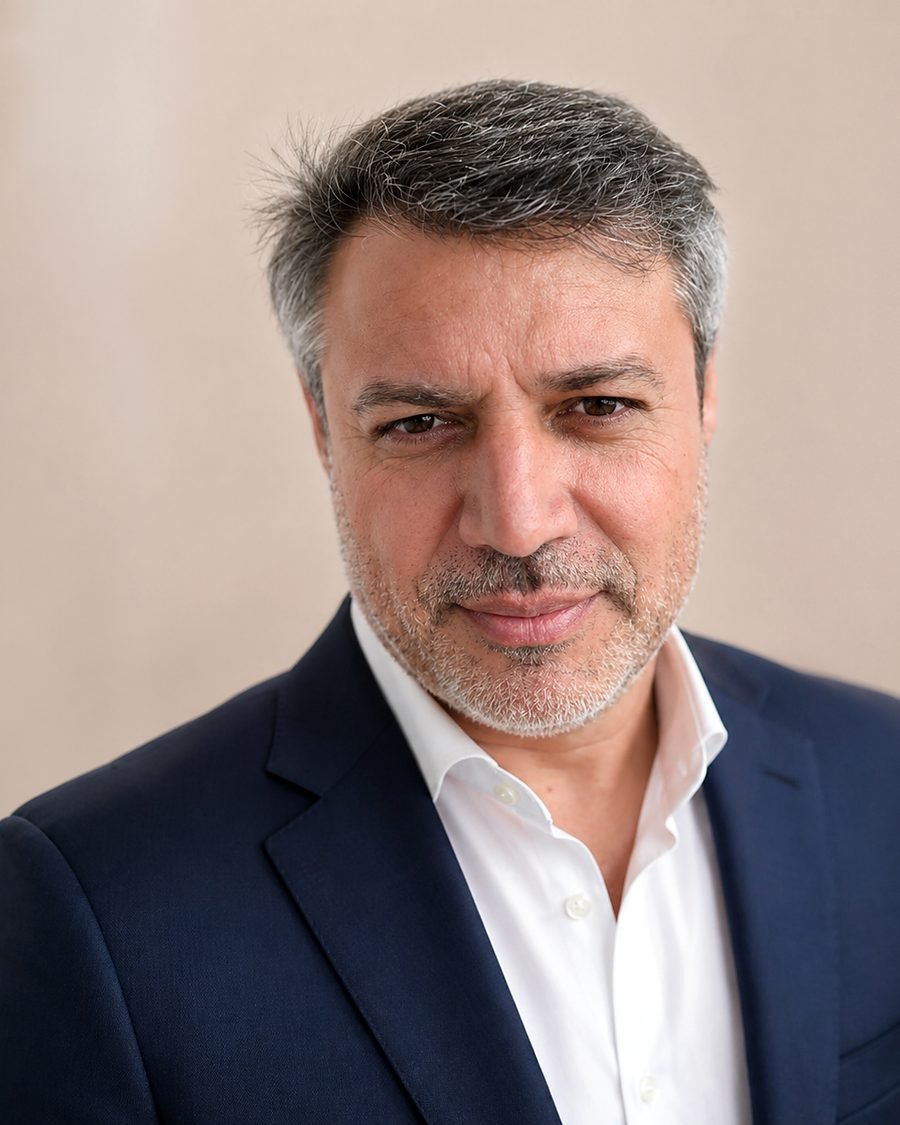
Judgement built in the operating seat.
João Oliveira has spent twenty-five years leading companies — through growth, restructuring, integration and leadership transition, in listed, private-equity-backed and founder-led environments across Europe and Latin America.
Commercial models rebuilt. Management teams deepened. Margin recovered. Businesses prepared for investors, partners and buyers. That record is the substance of the advice.
He works with each company directly, alongside the owner and the leadership team. The relationship is personal, the access is immediate, and the counsel is his own.
Every company reaches a point where working harder is no longer enough.
The first step is a confidential conversation — an hour to understand the situation and decide together whether to continue. Engagements are taken in small numbers, so that each one has room.